Ceilings Built to Handle Coastal Moisture
Ceiling drywall installation and repair in Greenville for water-damaged, sagging, or deteriorating overhead surfaces
JM Drywall installs new ceiling drywall and repairs damage across Greenville and the surrounding areas, where coastal humidity and salt air create persistent moisture exposure that deteriorates overhead surfaces. Homeowners in this region typically see ceiling stains, sagging panels, or crumbling texture after years of atmospheric moisture penetration or acute water intrusion from roof leaks and storm-driven rain. Proper ceiling repair requires addressing both the compromised drywall and the moisture source before finishing work begins.
The service involves overhead framing assessment to verify structural support, sheet installation with fastening patterns that prevent future sagging, joint compound application across seams, and texture matching to blend repairs with existing finishes. Bay area storms and the constant humidity near Corpus Christi accelerate ceiling deterioration compared to inland areas, making moisture-resistant materials and proper ventilation assessment critical during installation.
Schedule a property evaluation to identify moisture sources and assess ceiling framing integrity before repair work begins.
What Proper Ceiling Installation Requires
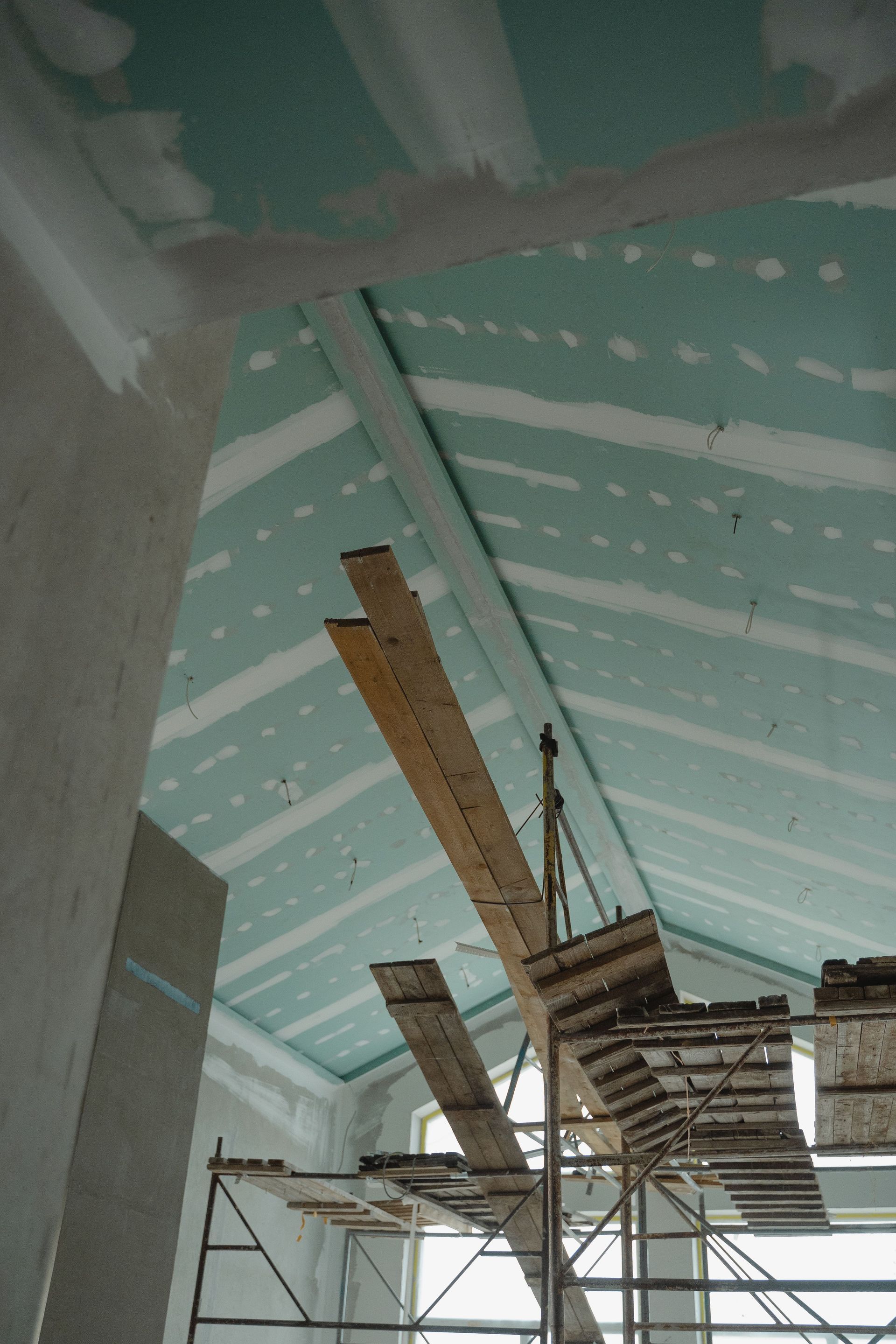
Ceiling work starts with framing inspection to confirm joists can support the weight of new drywall sheets and that no structural damage exists from prolonged water exposure. Fasteners are placed at specific intervals to prevent sagging over time, which becomes visible as wavy or uneven ceiling surfaces. Each seam receives multiple coats of joint compound, sanded smooth between applications, and texture is applied to match the surrounding finish whether it's knockdown, orange peel, or smooth.
Once installation is complete, you'll notice a level overhead surface with no visible seams, consistent texture across the entire ceiling, and no discoloration from old water stains. The new drywall resists the atmospheric moisture common in Greenville properties, preventing the soft spots and crumbling edges that occur when standard drywall remains exposed to coastal conditions year after year.
Water-damaged ceiling repairs also include identifying the moisture entry point, whether from roof penetration, plumbing leaks, or condensation buildup, to prevent recurrence. Repairs on ceilings with active moisture issues require resolving the source before panels are replaced, or the new drywall will deteriorate just as quickly as the original material.
What Homeowners Ask Before Starting Ceiling Work
Ceiling projects often raise questions about timing, materials, and what the finished surface will look like once repairs are complete.
What causes ceilings to sag in Greenville homes?
Prolonged exposure to coastal humidity softens drywall over time, and improper fastening during original installation allows gravity to pull panels away from joists, creating visible waves or bulges that worsen as moisture weakens the gypsum core.
How do you match texture on repaired ceiling sections?
The existing texture type is identified first—popcorn, knockdown, orange peel, or smooth—then replicated using spray equipment adjusted for pattern depth and consistency, ensuring the patched area blends invisibly with surrounding surfaces once painted.
When should I replace a water-stained ceiling instead of painting over it?
If the drywall feels soft when pressed, shows visible sagging, or has crumbling edges, the gypsum core has absorbed enough moisture to lose structural integrity and must be replaced rather than covered, as paint will not restore strength or prevent further deterioration.
What materials work best for ceilings in humid coastal areas?
Moisture-resistant drywall, often called green board or purple board depending on the manufacturer, contains additives that slow water absorption and prevent the soft spots and mold growth that occur when standard drywall remains in high-humidity environments for extended periods.
How long does ceiling drywall installation typically take?
Installation duration depends on ceiling square footage, framing condition, and whether moisture damage requires structural repairs before drywall can be hung, but most residential ceiling projects move through hanging, taping, finishing, and texture application within several days once prep work is complete.
JM Drywall handles ceiling repairs throughout Greenville and the surrounding areas, addressing both acute storm damage and long-term moisture deterioration common in coastal properties. Request a detailed estimate that includes framing assessment and moisture source evaluation for your specific ceiling condition.